
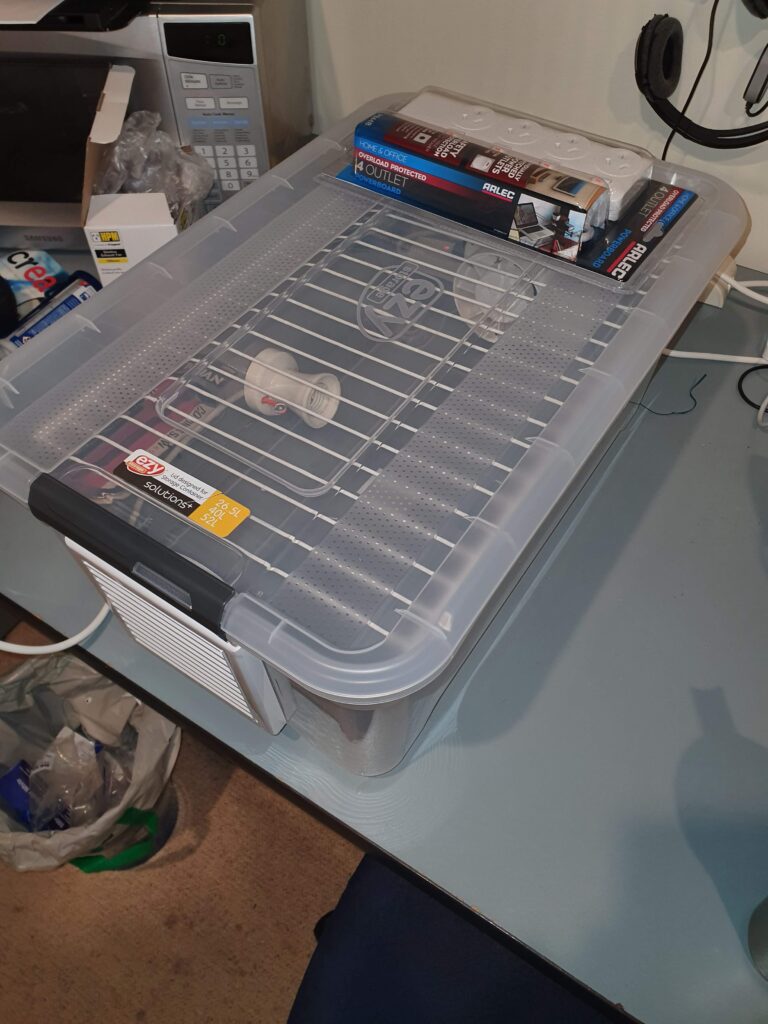
Many folks are intimidated by the electrical aspect of making their own machine, rightly so it is a silent killer. This post is for such people. Get the fellows at the hardware store to fit a lamp holder with a plug socket as well as to the fan. All you need to do is cut a hole in the plastic box for those sockets to reach an external socket adaptor. Thus no wiring just a bit of assembly.
It is important to find a basket or rack that fits snugly into the box for either resting the fruit on or hanging the meat from, as below.

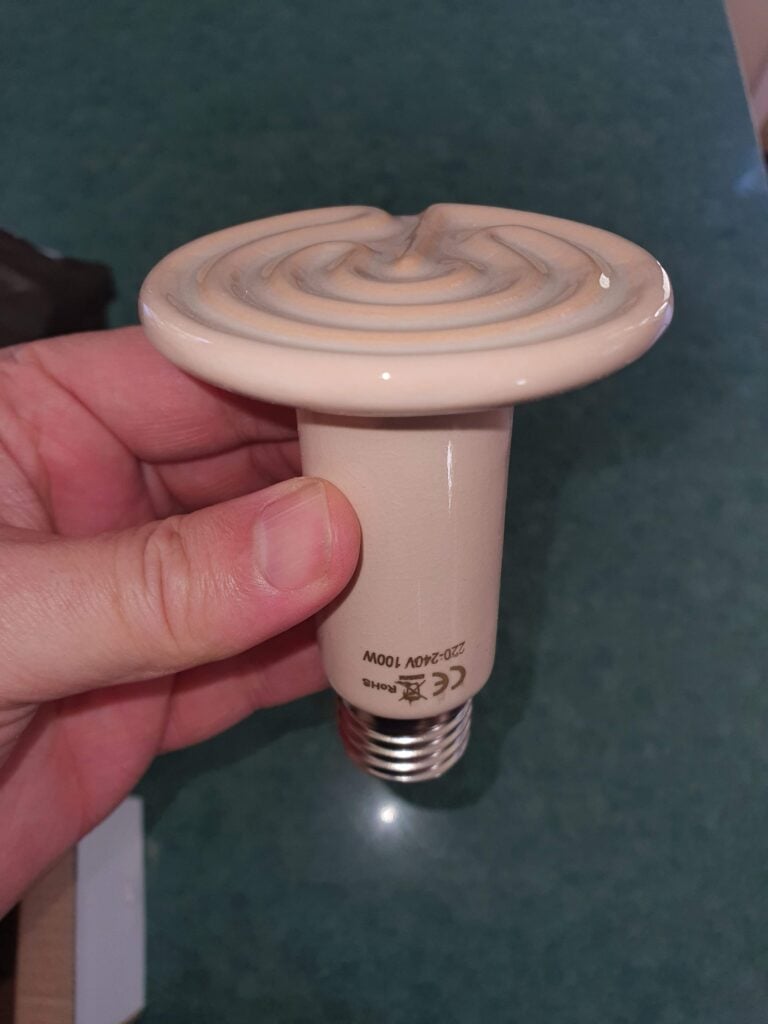
I recently found a ceramic bulb of 100 watt heating capacity. This works in high humidity environments. Note: The Grid Connect controlled socket – the one with “Smart Plug-in Socket” printed on the box within the above picture, is the one used for this heat source in this machine. The fan remains on during the duration of the process to vent out the moisture that is drawn out by the heat source – this is what the desiccation, or dehumidification is all about.
This just keeps getting better and better as technology advances! Now just to choose your spice from the websites by searching for “Crown Biltong Spice”.
Enjoy!!
Note: It’s probably a good idea to have your machine checked by an electrically qualified person, just to be safe.

A few lessons I learnt to bear in mind when using this Arlec equipment:
1) The setup requires you to be near your Wifi router with Bluetooth enabled on your phone do any smart switch that is used to switch the heat source on and off. The fan should run continuously.
2) The temperature set points (corresponding to the values read from the Arlec Bluetooth enabled temp and humidity sensor are in by default in degrees Fahrenheit and not degrees Celsius). Change it to what you best understand, experiment with at what low temperature you want it to switch on and then at what high temperature you want it the switch off at. This depends on the humidity in your area, as the more humid the air, the more heat is required in the box to liberate the moisture into the air. Ideally, cool dry climates are great for only a fan to dry the food, but when there is substantial humidity in the air, heat and a fan are the only options.
3) The temp and humidity sensor update rate can be changed by pressing the little button on it and watching the frequency change from the default of 30 min down to 5 min.
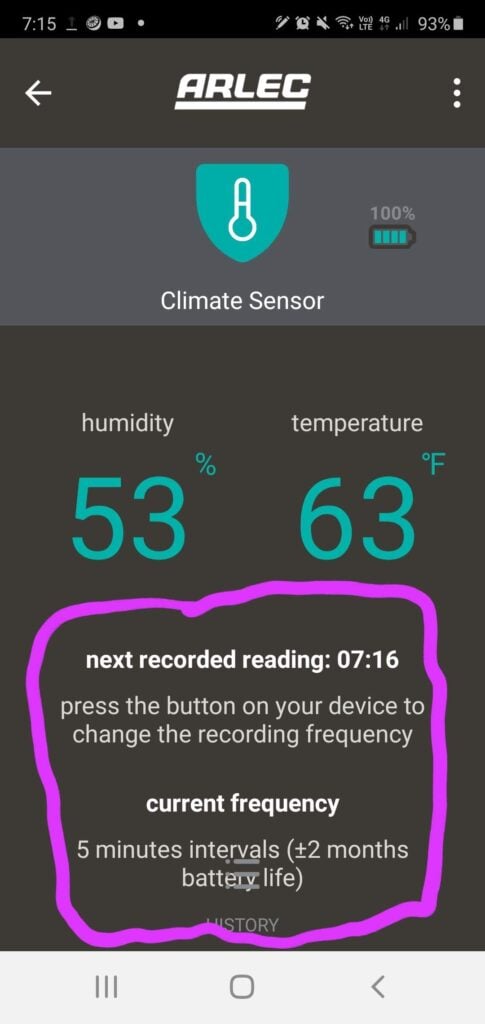
4) Most people struggle with getting the temp and humidity sensor to get registered with the App. It is important to press the button on this sensor for about 5 seconds until the red LED flashes rapidly and then to select Auto sync in the Smart Grid App on your phone.
A cool video of a great bunch of people who have a keen interest in building the machine using these exact parts is below. It actually is a heap of fun when you do this as a team, help each other out and treated it as bit of a “production line”:
A really nice South African actor that I watched growing up has now made some YouTube videos about the meat aspects of making biltong/beef jerky. He is an actor so will do the preparation better justice than me. I don’t use vinegar, as I don’t like the taste that it introduces into the final product. I only lay the raw meat in the biltong spice (Crown National – Safari Biltong Spice), which actually comprises: 1/3 part salt, 1/3 cracked brown pepper and 1/3 cracked dried coriander seeds. I lay it in a Pyrex dish, sprinkle half the spice over the one side of the meat, turn the meat over, sprinkle the other half of the spice on that side of the meat and then place that in the fridge for 24 hours with a cover of sandwich wrap (“Glad” wrap) to keep any other flavours within the fridge from permeating the meat – as he says “it isn’t rocket science”. Make sure that the “Glad” wrap doesn’t touch the meat and is pulled taut over the Pyrex dish. (Note: In Australia Jindurra steak costs only between AUD 13-20/kg depending on the cut and I have never had an issue with it: https://www.canstarblue.com.au/groceries/supermarket-meat-awards)
For dried fruit, look at the one about dried bananas.
Alternatively, the ‘secret sauce’ controller is a controller that can switch the heat source every few seconds, giving better control in making your dried foods. It also allows all interactions via Bluetooth from your mobile phone and if you connect to your local Wifi will show progress on a webpage, how cool is that! It also uses RF to control a plug socket so no electrical connections required. This is the state-of-the-art. If you want to buy a plug and controller it costs $100. Leave a comment we will get your details for an order. You are really going to love it! 👍🌟🍌🥩🍴